We accept
Medicare Advantage plans to fit your dental needs.
Medicare Advantage plans to fit your dental needs.

Although you may be one of the rare individuals who doesn't mind your experiences in the dentist's chair, many people experience anxiety that ranges from mild to severe when they contemplate a visit to their dentist's office. The medical term is odontophobia, and it afflicts more than 75 percent of adults. However, much of the anxiety about dental procedures comes from not knowing what to expect as well as the array of sharp and often noisy implements in the dentist's tray.
A tooth extraction is one of the most common as well as the most dreaded of dental procedures. An extraction is sometimes necessary, though, so understanding the reasons you might need one, as well as the procedures involved, should help alleviate much of your anxiety. To maintain the best oral health possible, it may sometimes be necessary to remove a tooth and replace it with an artificial tooth. Depending on several factors, you may not need to replace the tooth, however. When you're familiar with the reasons you may need an extraction, the cost of the procedure, and the recovery process, you'll feel less anxious about your upcoming sojourn in the dentist's chair.
The first step in getting a tooth extraction is getting an x-ray. This will enable your dentist to plan the optimal method for extraction as well as any plan for any contingencies that may arise. Your dentist will need to know your medical history, any conditions that you have, and the medications you're taking, both prescription and over-the-counter. You'll discuss your preferences for sedation and the need for someone to drive you home. If you develop a cold, nasal congestion, vomiting, or nausea during the week preceding your procedure, you should notify your dentist immediately since it could delay your procedure.
If you haven't already discussed your medical history and any current medications and supplements with your dentist, you should do so now. This will help achieve the optimal outcome for your procedure and minimize any risk or complication that might arise. Specifically, your dentist will need to know if you have or have had any of the following:
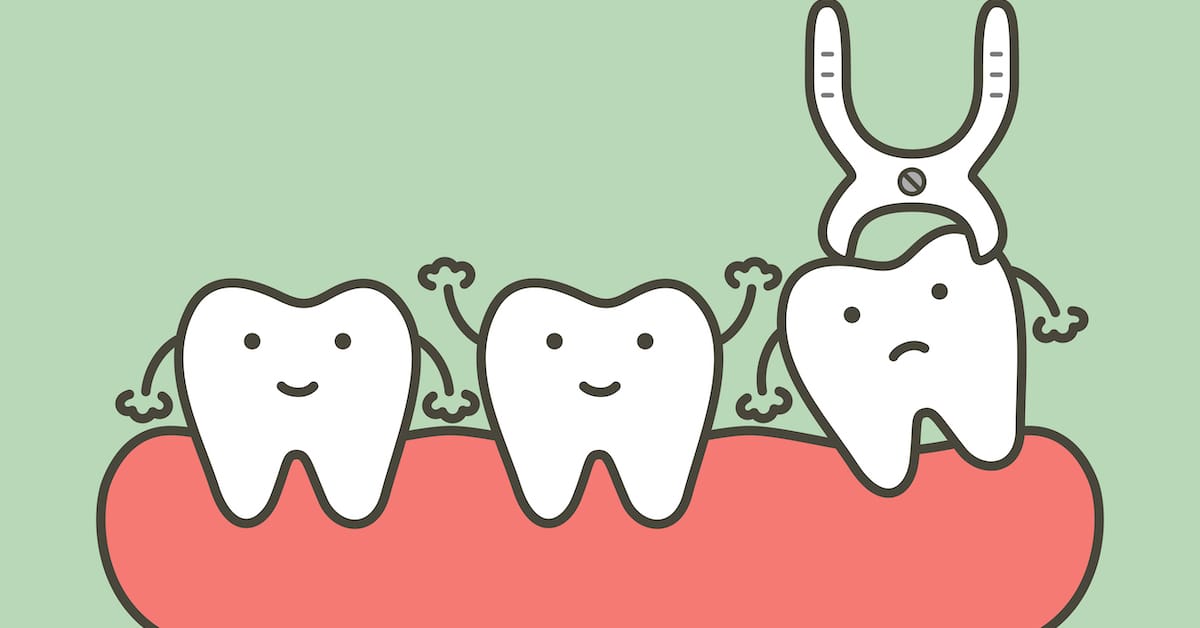
There are two types of tooth extractions, simple and surgical. A simple extraction is the removal of a visible tooth and doesn't usually require surgery. The tooth is simply loosened and then carefully extracted. Surgical tooth extraction is used for a tooth that isn't visible and it requires an incision in the gum.
Local anesthesia is used for both types of extractions, but a surgical extraction may also require an intravenous anesthesia. You shouldn't feel any pain during either of the procedures, although you may feel pressure. If you feel pain or pinching, let your dentist know immediately.
After your procedure is complete, your dentist may insert a few self-dissolving stitches and then place gauze on the site. You'll be asked to bite down firmly and hold the pressure. This will help the site to stop bleeding and enable clot formation. When you get home, be sure to follow these aftercare instructions:
Take pain medications as directed by your dentist and as you need them.
Although a certain amount of pain and discomfort is typical of any dental procedure, it shouldn't be excessive. If you experience any of the following, contact your Suffern dentist without delay.
If you have any of the symptoms listed above, be sure to contact your Suffern dentist immediately. Be sure to consume a semi-soft diet until the site has healed. You don't want food particles lodging in the incision and causing decay or pain.
Usually, it takes between one and two weeks for an extraction site to heal. After that, you can resume your usual lifestyle, diet, and activities.
Your wisdom teeth are the third and final set of molars to erupt. They're in the far back of your jaw behind the other teeth. Unfortunately, many people lack sufficient room in their jaw to accommodate another set of molars, so many dentists prefer the preventive measure of wisdom tooth extraction. However, not all dentists align with this procedure. Many people have wisdom teeth that erupt straight and don't crowd the other teeth. If they aren't problematic, there isn't necessarily a reason to remove them.
However, those who advocate for removal say that it's impossible to project if wisdom teeth problems will occur, so it's better to remove them at an earlier age when there's less likely to be complications. The American Dental Association recommends wisdom teeth removal for the following reasons:
This topic is hotly debated among dentists, so if you have a preference for one method or the other, then you can surely find an affordable, high-quality Suffern dentist whose ideas align with yours. Those who advocate for preemptive wisdom tooth removal do so for the following reasons:
Whichever side you're on, you can find a Suffern dentist who will give you an honest opinion about what’s right for you. If you're not happy with the first opinion you receive, then get a second opinion. But don't ignore the dental problems you have. Contact a dentist to learn the pros and cons so you can make an informed decision.